
2026-09-28 · Allison Brooks
Hardwood Flooring Installation Around Louisville Radiator Heat
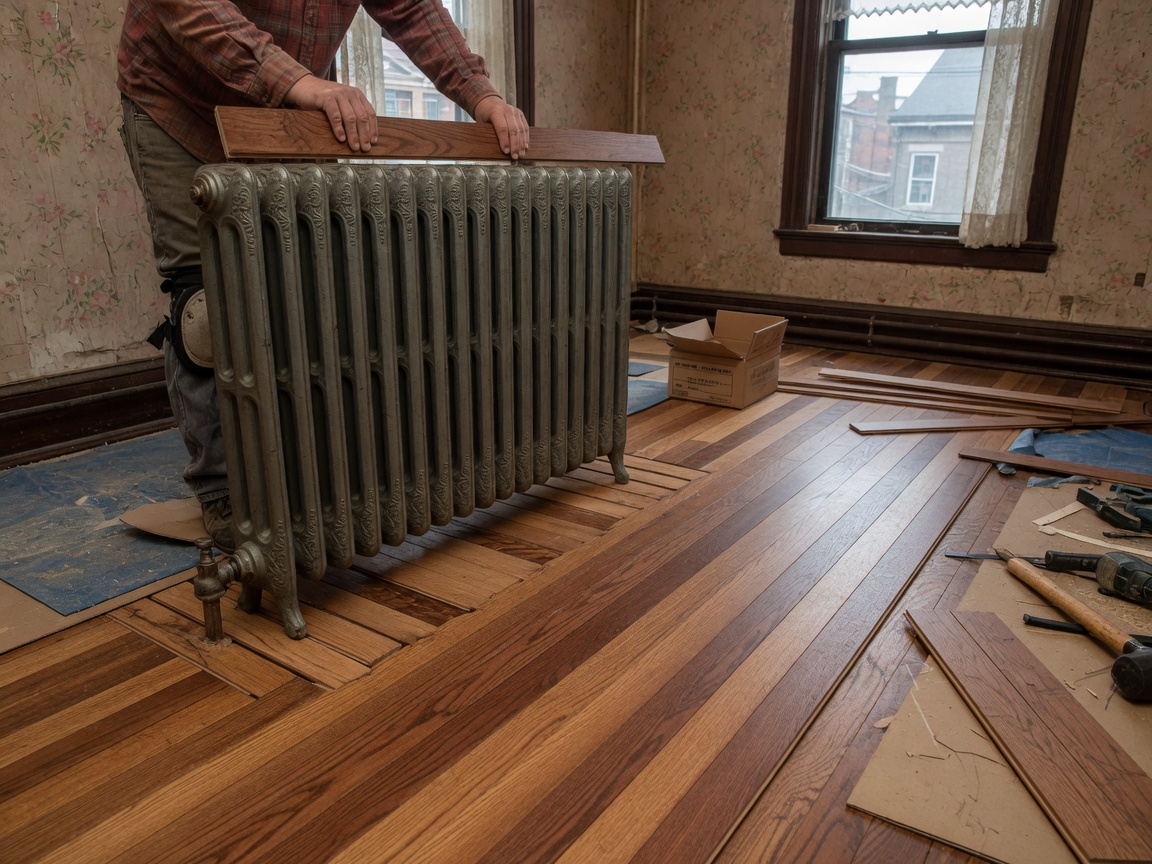
Hardwood flooring installation around radiator heat in Louisville works best when installers first acclimate the wood for 7–14 days in the space while monitoring moisture levels below 12 percent. This accounts for the mild winters and humid summers that drive repeated expansion and contraction cycles in Jefferson County homes.
Radiator Heat Effects on Hardwood in Older Louisville Neighborhoods
Many homes in Old Louisville, The Highlands, and Germantown still rely on original steam or hot-water radiators installed before 1940. These units create localized hot spots that dry the air directly above the floor, pulling moisture from hardwood planks and causing cupping or gapping within two heating seasons. Installers measure surface temperatures at radiator bases, often finding 85–95°F readings during winter, then route planks perpendicular to heat sources or leave ½-inch expansion gaps filled with cork. In Clifton and Butchertown row houses the same radiators sit closer to exterior walls, so subfloor moisture readings must stay under 10 percent before nailing begins to avoid hidden rot from Louisville's frequent summer humidity.
Subfloor Preparation Around Radiators
Before hardwood flooring installation starts, crews remove radiator covers and inspect for loose boards or past water stains common in Portland and Shawnee basements. Any plywood underlayment receives a moisture barrier rated for 3 lbs per 1,000 sq ft every 24 hours, especially near Crescent Hill and St. Matthews homes where soil moisture from the Ohio River basin stays elevated. Sanding high spots to within 3/16 inch over 10 feet prevents telegraphing once the wood dries against radiator heat. In Downtown lofts with concrete slabs, a floating system with 6-mil poly sheeting and perimeter isolation strips keeps planks from binding when temperatures swing 40 degrees between day and night.
Acclimation Steps for Louisville's Climate
Wood must sit in the actual room conditions for at least one week with radiators running at normal settings. Crews track relative humidity between 35–55 percent using digital meters placed near each heat source. This process mirrors steps outlined in Acclimating Hardwood Before Installation During Louisville Winters. Planks from the same bundle are stacked with spacers every 12 inches so air circulates evenly. In The Highlands homes with tall ceilings, extra days are added because upper-floor radiators run hotter. Once moisture content matches the subfloor within 2 percent, installation proceeds with ¾-inch solid oak or maple nailed at 45-degree angles around radiator pipes.
Long-Term Performance Near Heat Sources
Quarter-sawn species hold up better than plain-sawn when placed within 18 inches of radiators because their grain resists splitting under repeated drying. Homeowners in Germantown and Butchertown often choose 3¼-inch widths to reduce visible movement. Annual checks each fall before heat turns on catch early gaps that can be filled with matching putty. For spaces where radiator heat creates persistent low humidity, vinyl flooring installation offers a stable alternative that tolerates the same conditions without acclimation. Readers exploring similar heat-related projects may also review Hardwood Flooring Installation Around Louisville Fireplaces for overlapping techniques used in Jefferson County.