
2026-09-28 · Allison Brooks
Subfloor Repairs Before Hardwood Flooring Installation in Louisville
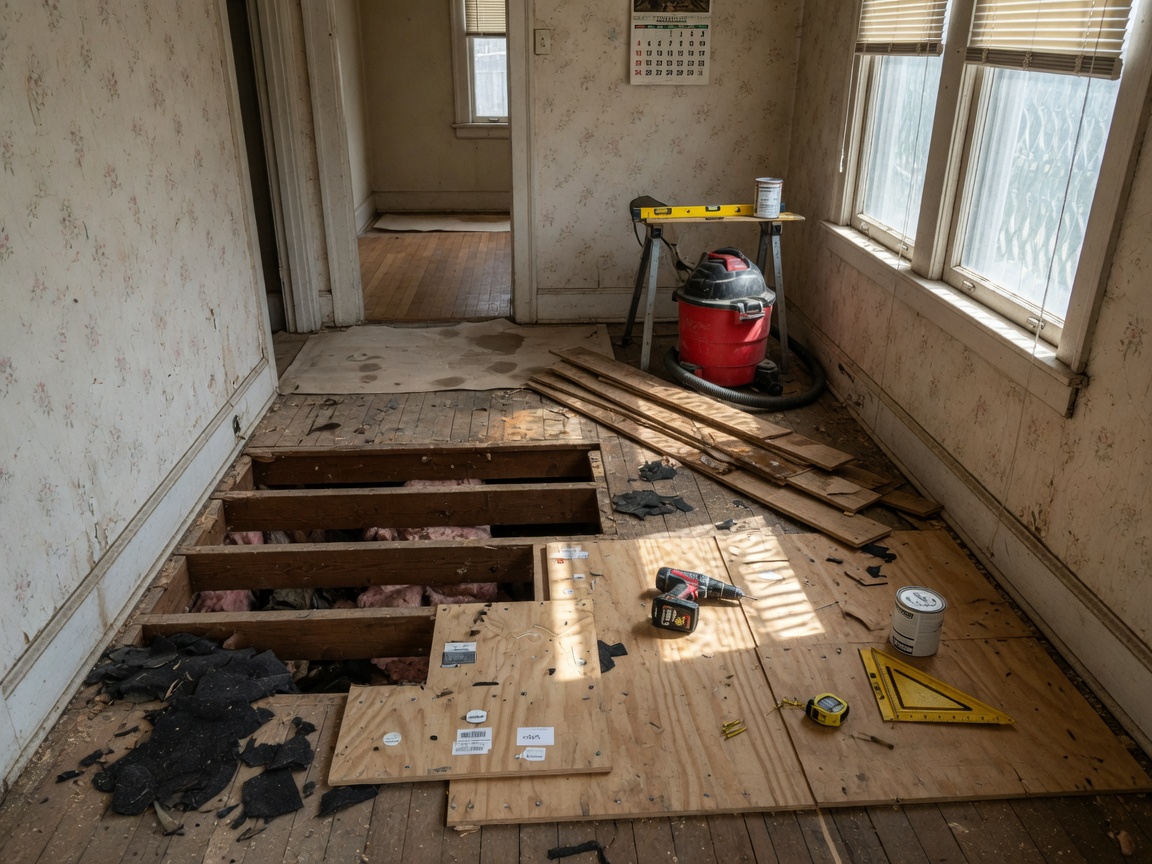
Subfloor repairs before hardwood flooring installation in Louisville typically require 3–7 days of work, depending on the extent of moisture damage or structural issues common in Jefferson County homes. Older housing stock in neighborhoods such as Old Louisville and The Highlands often features original wooden subfloors exposed to decades of humidity from hot summers and mild winters. Crews first inspect for rot, unevenness, or water intrusion near the Ohio River corridors in Portland and Butchertown before any new hardwood goes down.
Common Subfloor Problems in Jefferson County Homes
Many homes built before 1950 in The Highlands, Germantown, and Clifton have plywood or plank subfloors that sag or delaminate after repeated exposure to the area's humid subtropical conditions. Hot summers drive condensation under floors, while mild winters allow slow drying that still leaves residual moisture. In Shawnee and Crescent Hill, tree roots and shifting soil near Cave Hill Cemetery can create uneven settling that cracks subfloor seams. These issues show up as squeaks, soft spots, or visible dips when walking across rooms slated for hardwood flooring installation.
Water proximity to the Falls of the Ohio and Louisville Waterfront Park raises basement humidity levels that migrate upward. Crews check for these patterns by lifting sections of existing flooring and measuring moisture content with meters calibrated for local conditions. Addressing problems early avoids callbacks after the new hardwood is installed.
Moisture Assessment Steps Before Installation
Start by removing any existing floor covering to expose the subfloor across the full room. Use a pin-type meter to record readings at multiple points, especially near exterior walls in Downtown and St. Matthews properties. Readings above 12 percent usually signal the need for drying or replacement before proceeding with hardwood flooring installation. Document high spots with a 6-foot level and mark low areas that will require shimming or patching.
In homes near Churchill Downs or the Muhammad Ali Center, where basements may lack modern vapor barriers, add temporary dehumidifiers for 48 hours and retest. This step accounts for the region's summer humidity spikes that can push subfloor moisture back up after initial drying. Skip this evaluation and the new hardwood risks cupping within the first year.
Repair Techniques for Wooden Subfloors
For localized rot in Germantown or Butchertown homes, cut out damaged sections and sister new joists alongside originals using pressure-treated lumber. Fill gaps with plywood patches screwed every 6 inches along edges to restore a solid plane. In larger areas across Old Louisville two-story homes, install 3/4-inch tongue-and-groove plywood over the entire surface, staggering seams to prevent telegraphing through the finished hardwood.
When slab-on-grade foundations appear in newer St. Matthews sections, apply a self-leveling compound after sealing cracks to handle minor elevation changes. Always fasten patches with construction adhesive plus screws to eliminate movement that would telegraph through the final hardwood flooring installation. These methods match the real demands of Louisville's older housing stock rather than generic fixes.
Timing Repairs with Seasonal Conditions
Schedule subfloor work during Louisville's milder spring or fall windows when outdoor humidity stays lower, reducing the chance of reintroducing moisture during the process. Hot summer months require extra drying time, while mild winters still bring enough ground moisture in Jefferson County to affect crawl spaces. Plan the full sequence so hardwood flooring installation follows immediately after repairs pass moisture tests.